
Blogs
What Is Static Hash
Sep
What Is Static Hash? 7 Powerful Facts About Static Sift
What is Static Hash? Static Hash is a highly refined form of dry-sift cannabis concentrate in which electrostatic charge is used to help separate resin-rich trichome heads from unwanted plant material. Rather than relying on water or chemical solvents, the process builds on traditional dry sifting and uses differences in the electrical properties of cannabis particles to achieve a cleaner trichome-rich fraction.
The term has become increasingly common among people researching high-quality hash, solventless concentrates, and modern cannabis processing. However, Static Hash is often misunderstood. It is not simply another name for ordinary kief, nor is it exactly the same as traditional dry sift.
This guide explains how Static Hash works, what makes it different from other forms of hash, why trichomes matter, what determines quality, and what current scientific research tells us about electrostatic trichome separation. Readers who want to explore how Static Hash fits into a broader range of cannabis products can also visit Darwin Farms.
What Is Static Hash?
Static Hash is generally understood as dry-sift cannabis material that has undergone an additional purification stage using static electricity.
The starting material is usually dry sift. During dry sifting, cannabis material is mechanically agitated over fine screens, allowing small particles—including detached trichome heads—to pass through.
The sifted material may still contain:
- Glandular trichome heads
- Trichome stalks
- Small fragments of leaf material
- Plant dust
- Other microscopic particles
Static separation is then used to distinguish more desirable resin-bearing particles from some of the remaining plant material.
The result can be a much cleaner and more trichome-dominant material than ordinary unrefined dry sift.
What Does “Static” Mean in Static Hash?
The word static refers to static electricity, or more specifically the electrical charges that can develop on different particles.
When materials contact or rub against one another, electrons can move between their surfaces. This phenomenon is known as triboelectric charging.
Different materials can acquire different electrical charges. Static-tech hash processing takes advantage of these differences to help separate cannabis trichomes from fragments of plant biomass.
A 2025 study published in the Journal of Cannabis Research examined the electrical properties of cannabis trichomes and plant biomass. The researchers reported measurable differences in particle charge and investigated how electrostatic forces could be used to separate trichomes from unwanted plant material.
You can read the peer-reviewed research through Journal of Cannabis Research.
What Are Cannabis Trichomes?
Understanding what Static Hash is becomes much easier once you understand trichomes.
Trichomes are tiny structures found on the surface of cannabis flowers and surrounding plant material. Some glandular trichomes contain significant concentrations of cannabinoids, terpenes, and other plant compounds.
Under magnification, mature glandular trichomes often resemble tiny stalks topped by rounded resin glands.
These glandular heads are especially important in hash production because hash-making methods generally aim to separate and concentrate resin-bearing material from the rest of the plant.
How Does Static Hash Work?
At a basic level, Static Hash production involves two stages:
- Mechanical separation produces dry sift containing trichomes mixed with smaller amounts of plant matter.
- Static refinement uses electrical differences between particles to improve separation.
The scientific principle is more interesting than simply saying that static electricity “picks up” trichomes.
Research published in 2025 found that cannabis plant biomass and trichome-rich particles could develop different electrical charges. The researchers observed that plant biomass tended toward positive charge while trichome-containing fractions demonstrated negative electrical characteristics under the experimental conditions.
Those differences mean charged particles can respond differently when subjected to electrostatic forces.
Traditional manual static techniques use relatively simple materials and surface interactions. More advanced electrostatic systems can use controlled electric fields to achieve similar separation principles on a larger scale.
Is Static Hash the Same as Dry Sift?
No. The terms are closely related, but they are not necessarily interchangeable.
Dry sift refers to trichome-rich material produced by mechanically separating dried cannabis through screens.
Static Hash generally refers to dry sift that has been further cleaned or refined using electrostatic separation.
A simple way to understand the relationship is:
Cannabis flower → dry sifting → dry sift → static refinement → cleaner Static Hash
Therefore, static processing can be considered an additional refinement step rather than an entirely unrelated form of hash production.
Static Hash vs Dry Sift
| Characteristic | Static Hash | Dry Sift |
|---|---|---|
| Starting material | Usually refined dry sift | Dried cannabis flower/material |
| Main separation principle | Electrostatic refinement | Mechanical screening |
| Water required | No | No |
| Solvents required | No | No |
| Primary goal | Increase trichome purity | Separate trichomes from plant material |
| Plant contamination | Potentially lower after refinement | Depends heavily on sifting quality |
The major difference therefore comes down to refinement and purity rather than simply the original cannabis material.
Static Hash vs Bubble Hash
Static Hash and bubble hash both aim to separate cannabis trichomes, but they approach the task differently.
Static Hash
Static Hash is part of the dry-processing family. It generally begins with dry sift and uses static or electrostatic forces as part of the refining process.
Bubble Hash
Bubble hash—often called ice-water hash—uses cold water, ice, agitation, and filtering bags or screens to separate trichomes from cannabis plant material.
Both techniques avoid traditional hydrocarbon solvents, but one operates primarily as a dry process while the other depends on water-based separation.
Static Hash vs Traditional Hash
Traditional hash-making techniques have existed for centuries and vary significantly by region.
Some methods involve collecting resinous material and then pressing, rolling, heating, or otherwise processing it into blocks or balls.
Static Hash reflects a more modern emphasis on particle separation and trichome purity.
That does not automatically mean that every Static Hash product is superior to every traditional hash. Quality depends on factors such as:
- Starting material
- Trichome maturity
- Plant contamination
- Processing conditions
- Storage
- Temperature
- Handling
- Final purity
Why Is Trichome Purity Important?
A primary objective of refined hash production is usually to increase the proportion of glandular resin material relative to ordinary plant tissue.
If a sifted sample contains large quantities of shredded leaf material, it may appear greener and contain a lower proportion of intact resin glands.
A cleaner trichome fraction can have less visible plant contamination.
This is one reason static refinement receives so much attention: it offers a way to further separate particles after the initial dry-sift stage.
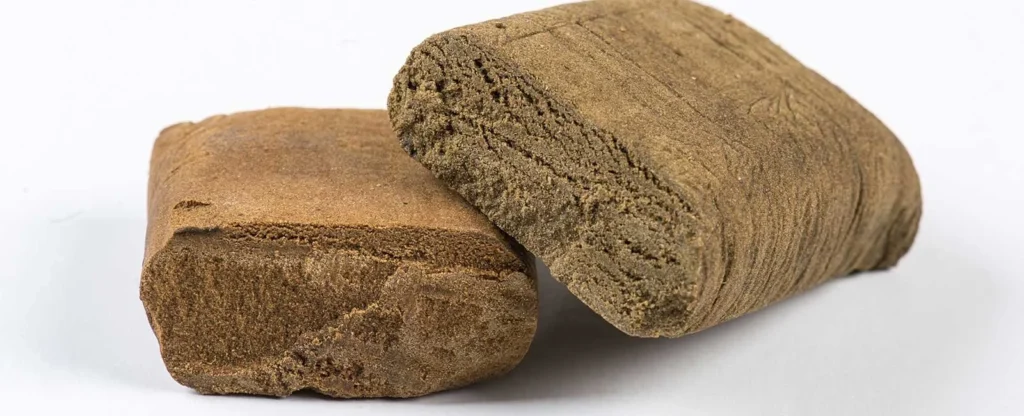
What Does Static Hash Look Like?
There is no single color or texture that proves a product is authentic Static Hash.
Appearance can vary according to cultivar, maturity, oxidation, processing, pressing, storage, and trichome composition.
Static-sift material may appear in shades such as:
- Light blonde
- Golden
- Beige
- Light brown
- Darker brown after aging or pressing
Loose high-purity sift can appear granular or sandy because it contains many individual trichome heads. Pressing or warming the material can significantly change the texture.
Color alone should therefore never be used as the only measurement of quality.
What Does Static Hash Smell Like?
Aroma varies substantially because Static Hash is not a cannabis strain.
The aromatic profile is largely connected to the plant material from which the trichomes originated and how the material was processed and stored.
Depending on the cultivar, resin-rich material may display aromas described as:
- Citrus
- Fruit
- Earth
- Pine
- Floral
- Herbal
- Sweet
- Dessert-like
- Fuel-like
- Spicy
Terpenes contribute significantly to the aroma of cannabis products, although aroma alone does not reliably predict cannabinoid content, potency, or individual effects.
Does Static Hash Have More THC?
Static Hash can potentially contain a higher proportion of cannabinoids than unprocessed flower because the process concentrates trichome-rich material.
However, the name Static Hash does not guarantee a particular THC percentage.
Actual cannabinoid concentration depends on variables including:
- The original cannabis cultivar
- Cannabinoid concentration of the starting material
- Trichome maturity
- Purity of the separated fraction
- Processing method
- Storage conditions
- Laboratory testing methodology
For this reason, claims about exact potency should be based on product-specific laboratory testing rather than assumptions based on the word “static.”
Does Static Hash Use Chemical Solvents?
Static separation itself does not require hydrocarbon or chemical solvents.
The technique depends on mechanical separation and electrical properties instead.
This places Static Hash within the broader category of concentrates commonly described as solventless.
However, “solventless” should not automatically be interpreted as meaning stronger, safer, or higher quality. Those are separate questions that depend on production standards, contamination, testing, storage, and product composition.
What Determines Static Hash Quality?
Several factors influence the quality of a Static Hash product.
1. Starting Material
Good separation cannot completely compensate for poor starting material. Resin coverage, plant condition, harvest timing, drying, and storage all influence the material entering the process.
2. Trichome Maturity
Different stages of trichome development can affect cannabinoid and terpene composition.
3. Separation Efficiency
A cleaner separation generally means fewer fragments of plant material mixed with the desired trichome-rich fraction.
4. Temperature and Humidity
Environmental conditions can influence the physical and electrical behavior of small particles.
The 2025 electrostatic-separation study found that particle charge was affected by temperature, highlighting how processing conditions can influence electrostatic separation.
5. Handling
Trichomes are delicate structures. Excessive mechanical handling can damage them or mix contaminants back into the material.
6. Storage
Exposure to oxygen, heat, moisture, and light can alter cannabis compounds over time. Proper storage is therefore important for maintaining product characteristics.
Is Static Hash the Same as Kief?
Not usually.
Kief is a broad term commonly used for loose trichome-rich material separated from cannabis flower.
Kief can contain varying amounts of plant contamination depending on how it was collected.
Static Hash typically describes material that has undergone additional refinement specifically intended to improve separation between trichomes and plant particles.
Therefore, all Static Hash begins with trichome-rich material similar to sift, but not all kief should be described as Static Hash.
Is Static Hash a New Invention?
The principles behind static electricity are certainly not new, and hash makers have experimented with static-based purification techniques for years.
What is newer is the scientific examination and industrial development of controlled electrostatic cannabis separation.
The 2025 Journal of Cannabis Research study specifically describes manual “static tech” and investigates how the principle could be converted into scalable electrostatic separation technology.
This scientific work helps explain why techniques developed through practical experimentation can actually separate cannabis particles.
What Scientific Research Says About Static Separation
The 2025 research provides one of the clearest scientific explanations of electrostatic cannabis trichome separation currently available.
Researchers measured the electrical characteristics of cannabis plant biomass and trichomes and found differences that could be exploited during separation.
The researchers then developed an electrostatic system designed to separate particles according to their electrical charge and movement through an electric field.
This is significant because it provides a scientific framework for understanding why static refinement can work instead of treating the process purely as cannabis-industry folklore.
It also demonstrates that electrostatic separation has potential applications beyond small-scale manual static-tech methods.
Common Misconceptions About Static Hash
“Static Hash is a cannabis strain.”
No. Static Hash describes a processing or refinement style, not a specific cultivar.
“Static Hash always has extremely high THC.”
Not necessarily. Refining trichomes can concentrate cannabinoids, but exact potency varies and should be verified through laboratory analysis.
“Any blonde hash is Static Hash.”
No. Color does not prove how a hash product was manufactured.
“Static Hash and dry sift are exactly the same thing.”
They are closely connected, but Static Hash generally refers to sift that has received additional electrostatic refinement.
“Static Hash uses electrical extraction of cannabinoids.”
This is misleading. The electricity is being used as part of particle separation. Cannabinoids are not being electrically dissolved or chemically extracted from the plant.
Static Hash and Modern Hash Products
Modern hash products span a wide range of techniques, textures, starting materials, and strain-inspired profiles.
Understanding the processing method makes it easier to distinguish between marketing terminology and genuine differences in production.
Readers researching modern hash varieties can explore the broader Darwin Farms Static Hash and hash guide, which connects Static Hash with dry sift, bubble hash, and other hash styles.
For examples of strain-inspired hash profiles, readers can also compare Mimosa Hash, Zkittlez Hash, and Runtz Hash. These links are useful for understanding how different flavor and strain identities can exist within the wider hash category.
How to Evaluate Information About Static Hash
Because cannabis terminology changes quickly, consumers should avoid judging quality based only on labels such as “static,” “premium,” “full melt,” or “top shelf.”
More useful information includes:
- How the product was separated
- The quality of the starting material
- Whether the product has been independently tested
- Its cannabinoid profile
- Its terpene profile
- How it was stored
- Whether contaminants were tested
- Whether the producer clearly explains its terminology
The more transparent the product information, the easier it becomes to make meaningful comparisons.
Frequently Asked Questions About Static Hash
What is Static Hash in simple terms?
Static Hash is trichome-rich dry sift that has been further refined using static electricity to help separate desirable resin glands from unwanted plant particles.
Is Static Hash dry sift?
Static Hash normally begins as dry sift. Static refinement is an additional purification step applied to the sifted material.
Why is it called Static Hash?
It is called Static Hash because static or electrostatic charge is used during the separation of trichome-rich particles from plant contaminants.
Does Static Hash use water?
The static-refinement process itself is dry and does not require water. This differs from bubble hash, which uses ice water during trichome separation.
Is Static Hash solventless?
Yes, conventional static separation does not require hydrocarbon solvents. It relies on mechanical sifting followed by electrostatic separation.
Is Static Hash stronger than normal hash?
It can contain a highly concentrated trichome fraction, but the name alone does not determine potency. Cannabinoid concentration varies between products and should be confirmed through laboratory testing.
What is the difference between Static Hash and kief?
Kief is loose trichome-rich material collected from cannabis. Static Hash generally undergoes additional electrostatic purification intended to reduce unwanted plant material.
What is the difference between Static Hash and bubble hash?
Static Hash uses dry mechanical and electrostatic separation, whereas bubble hash uses cold water, ice, agitation, and filtration screens to separate trichomes.
What makes Static Hash high quality?
Important factors include high-quality starting material, mature resin glands, effective separation, low plant contamination, careful handling, appropriate storage, and reliable laboratory testing.
Is Static Hash a strain?
No. Static Hash describes a processing method. It can theoretically be produced from many different cannabis cultivars.
Key Takeaways
- Static Hash is closely related to dry sift but receives additional electrostatic refinement.
- The process focuses on separating resin-rich cannabis trichomes from unwanted plant biomass.
- It does not normally require water or hydrocarbon solvents.
- Static Hash is not a strain and does not guarantee a particular THC percentage.
- Trichome purity, starting material, handling, processing conditions, and storage all influence quality.
- Peer-reviewed research now supports the scientific principle behind electrostatic cannabis trichome separation.
- Static Hash differs from bubble hash because bubble hash relies on ice-water separation.
Conclusion: What Is Static Hash?
So, what is Static Hash? It is best understood as a highly refined form of dry sift in which static or electrostatic forces help separate cannabis trichome heads from unwanted pieces of plant material.
The technique combines traditional hash-making principles with a surprisingly technical aspect of particle science. What began largely as a craft refinement technique now has growing scientific support showing that cannabis trichomes and plant biomass possess electrical differences that can be used during separation.
Static Hash should therefore be understood as a method of refinement rather than a particular strain, potency level, color, or flavor.
For readers interested in comparing Static Hash with other resin-focused cannabis products, the Darwin Farms hash guide provides a natural starting point, while the main Darwin Farms website connects the topic with the broader cannabis and hash collection.
Adult-use cannabis laws vary significantly between countries, states, and regions. This article is provided for educational purposes and does not constitute medical or legal advice.
