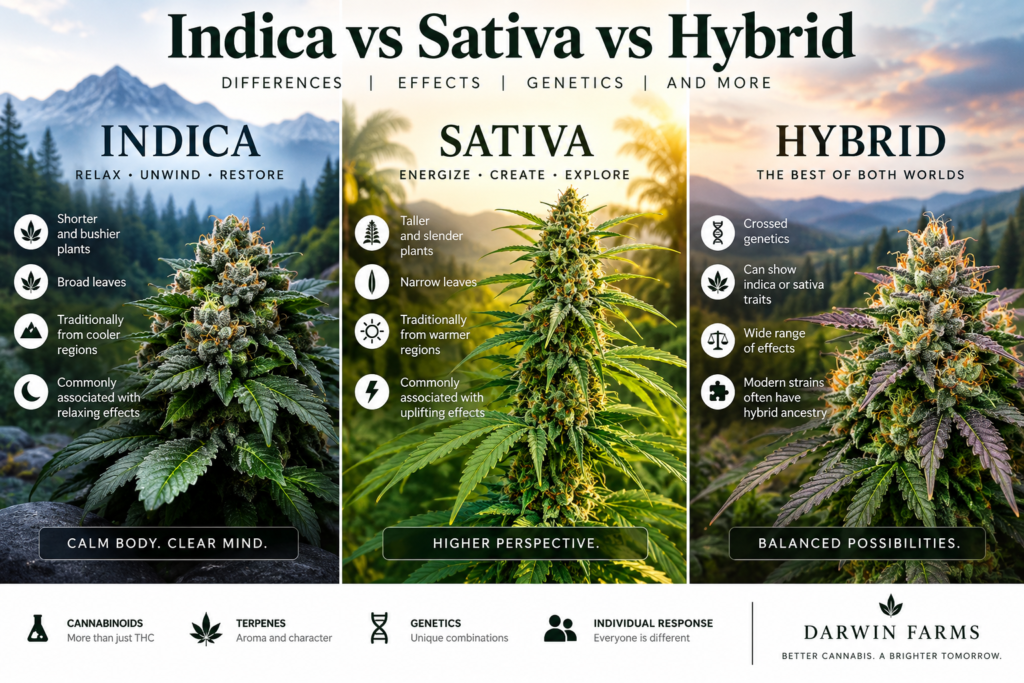
Indica vs Sativa vs Hybrid: What’s the Difference? Indica vs Sativa vs Hybrid is one of the most common comparisons people make when learning about cannabis. The three terms appear on strain descriptions, cannabis menus, educational websites and product pages throughout the United States, the United Kingdom and other markets. The traditional explanation is simple: indica strains are commonly associated with relaxing experiences, sativa strains with more uplifting or energetic experiences, and hybrid strains with characteristics from both. However, modern cannabis science shows that the difference between indica, sativa and hybrid is much more complicated than these familiar labels suggest. This guide explains what the terms mean, where they originated, how modern hybrid genetics have changed cannabis classification, and why cannabinoids, terpenes and individual chemistry may tell you more about a strain than the words indica or sativa alone. You can also explore the wider Darwin Farms strain collection for examples of modern cannabis genetics. Indica vs Sativa vs Hybrid: The Short Answer If you simply want to understand the traditional difference between indica vs sativa vs hybrid, here is the basic comparison: Category Traditional Description Plant Characteristics Common Consumer Association Indica Broad-leaf cannabis traditionally associated with Central and South Asian regions Typically shorter and bushier with broader leaves Relaxing, calming or body-focused experiences Sativa Narrow-leaf cannabis historically associated with warmer climates Typically taller with narrower leaves Uplifting, cerebral or energetic experiences Hybrid Cannabis produced by crossing different genetic lines Can display characteristics from either parent lineage Effects can vary widely depending on genetics and chemistry These descriptions are useful as a starting point, but they should not be treated as guaranteed predictions. Modern cannabis has been extensively crossbred, and two products carrying the same broad category can have very different cannabinoid and terpene profiles. What Is an Indica Strain? An indica strain is traditionally associated with Cannabis plants that grow shorter and more compact than classic sativa varieties. They are commonly described as having broader leaves, dense branching and relatively compact growth patterns. The word indica historically referred more to botanical characteristics and geographic origin than to a specific type of psychoactive effect. Over time, however, cannabis culture began using the word indica as shorthand for strains consumers often describe as relaxing, calming, heavy or suited to slower-paced situations. Traditional Indica Characteristics Shorter and more compact plant structure Broad leaves Dense branching Frequently associated with shorter flowering periods Traditionally linked with mountainous or cooler growing regions Often marketed as producing relaxing or body-oriented experiences The last point is important: an indica label does not guarantee sedation or relaxation. The actual experience can depend on THC concentration, other cannabinoids, terpene composition, dose, tolerance and individual response. What Is a Sativa Strain? A sativa strain traditionally refers to cannabis plants associated with taller growth, narrower leaves and longer flowering periods. Classic sativa-type plants are historically associated with warmer or tropical regions where longer growing seasons can support taller plants. In modern cannabis terminology, sativa has also become associated with consumer-reported experiences described as uplifting, cerebral, stimulating, creative or energetic. Traditional Sativa Characteristics Taller plant structure Narrower leaves Longer internodal spacing Often associated with longer flowering cycles Historically connected with warmer climates Frequently marketed as uplifting or energizing Again, the classification should be understood as a broad traditional label rather than a promise about how a particular cannabis product will affect every person. What Is a Hybrid Cannabis Strain? A hybrid cannabis strain is generally produced by crossing different cannabis genetic lines. Because cannabis breeders have been creating new crosses for generations, a large proportion of modern commercial strains have hybrid ancestry. Some hybrids are described as: Indica-dominant hybrids Sativa-dominant hybrids Balanced hybrids These terms can help describe how breeders or sellers interpret a strain’s ancestry, but they still do not provide a complete chemical profile. For example, modern dessert-style strains, Gelato crosses and Runtz-related genetics often contain multiple generations of hybridisation. This is one reason the simple indica-versus-sativa distinction becomes less precise when discussing modern cannabis. Indica vs Sativa vs Hybrid Comparison Feature Indica Sativa Hybrid Traditional plant shape Short and bushy Tall and slender Varies by genetics Leaf shape Broad Narrow Can vary Traditional effect association Relaxing Uplifting Variable Genetic background Traditional indica ancestry Traditional sativa ancestry Crossed genetics Modern reliability for predicting effects Limited Limited Limited Better information to examine Cannabinoid profile, terpene profile, potency, dose and individual response Where Did the Terms Indica and Sativa Come From? The words indica and sativa existed long before modern dispensaries or commercial strain menus. Historically, botanists attempted to classify cannabis plants according to features such as morphology, geographical origin and intended use. Different classification systems have been proposed over time, and cannabis taxonomy remains more complicated than the modern consumer labels might suggest. A peer-reviewed review of cannabis systematics explains that common commercial uses of the terms sativa and indica do not always align neatly with formal botanical taxonomy. Extensive breeding and genetic exchange have made simple classifications increasingly difficult. For readers interested in the scientific history, see the peer-reviewed review Cannabis Systematics at the Levels of Family, Genus, and Species, available through the U.S. National Library of Medicine’s PubMed Central database. Why Indica vs Sativa Is More Complicated Today One of the biggest changes in modern cannabis is extensive hybridisation. Breeders have crossed plants repeatedly to select characteristics such as aroma, flavour, cannabinoid production, appearance, resin production, growth traits and other desirable features. As a result, many strains available today do not fit neatly into a traditional indica or sativa category. This is particularly important when comparing indica vs sativa vs hybrid strains. A modern strain described as indica may contain genetics from several earlier hybrid lines. The same applies to strains marketed as sativa. Do Indica and Sativa Labels Predict Effects? Not reliably. This is one of the most important points when learning the difference between indica and sativa. A large study examining the phytochemical diversity of commercial cannabis in the United States found that the familiar Indica, […]
Tag Archives: Hybrid Cannabis Strains
Gelato 41 Strain: Genetics, Effects, Flavor, THC & Terpenes Gelato 41 is one of the most recognizable names in modern cannabis, known for its dessert-like flavor profile, distinctive appearance, strong reputation for potency, and relaxing hybrid effects. Whether you’re researching the genetics behind this popular cultivar or looking for premium cannabis from Darwin Farms, this guide covers what makes Gelato 41 stand out. Also known as Gelato #41 or G41, this cultivar is commonly associated with the Sunset Sherbet and Thin Mint Cookies lineage. Consumer reports and strain databases commonly describe it as a relaxing, euphoric hybrid with sweet, floral, earthy, peppery, and dessert-inspired characteristics. Gelato 41 Key Takeaways Also known as: Gelato #41 and G41 Type: Hybrid Commonly reported genetics: Sunset Sherbet × Thin Mint Cookies Reported effects: Relaxed, euphoric, happy, tingly Common flavor notes: Lavender, pepper, floral, earthy, sweet, berry and citrus Commonly reported terpenes: Caryophyllene, limonene and myrcene Potency: Often described as above average, although cannabinoid levels vary by grower and batch Best known for: Dessert-like flavor, dense trichome coverage and a relaxing hybrid experience Gelato 41 at a Glance Characteristic Gelato 41 Common name Gelato 41 / Gelato #41 / G41 Type Hybrid Genetics Sunset Sherbet × Thin Mint Cookies Reported effects Relaxed, euphoric, happy, tingly Flavor Floral, peppery, sweet, earthy and fruit-forward Leading terpenes Caryophyllene, limonene and myrcene Appearance Dense, frosty buds with green, purple and orange tones What Is Gelato 41? Gelato 41 is a modern hybrid cannabis cultivar associated with the Gelato family. Leafly identifies Gelato #41 as a hybrid and lists Sunset Sherbet and Thin Mint Cookies as its parents. Weedmaps similarly identifies the strain’s parents as Sherbet and Thin Mint Cookies and describes Gelato 41 as a prized phenotype from the original Gelato family. What makes Gelato 41 particularly interesting is the combination of its genetics, appearance, aroma and reported effects. Rather than being known for just one characteristic, it has developed a reputation around the entire experience—from frosty, colorful buds to creamy, floral and peppery flavor notes. If you’re interested in trying the cultivar itself, you can explore the Gelato 41 strain from Darwin Farms. What Does Gelato 41 Mean? The name Gelato 41 refers to one of the numbered Gelato phenotypes. It is also frequently written as Gelato #41 or shortened to G41. The number helps distinguish this particular selection from other Gelato phenotypes. While several cultivars share the Gelato name, Gelato 41 has developed its own identity because of its specific genetic selection and characteristic terpene and effect profile. The History and Origin of Gelato 41 Gelato 41 is closely connected with the California cannabis breeding scene and the broader Gelato family. Its commonly documented lineage combines Sunset Sherbet with Thin Mint Cookies, two influential parents associated with the dessert-style cannabis genetics that became increasingly popular in modern cannabis culture. Weedmaps describes Gelato 41 as a standout selection from the Gelato family, while Leafly identifies it as a hybrid created from Sunset Sherbet and Thin Mint Cookies. Different cultivators may offer their own versions or phenotypes, so the exact expression can vary between batches. Gelato 41 Genetics The commonly documented genetics of Gelato 41 are: Sunset Sherbet × Thin Mint Cookies This combination helps explain the cultivar’s dessert-oriented reputation. Sunset Sherbet is associated with sweet, fruity and creamy characteristics, while Thin Mint Cookies contributes to the broader Cookies family genetic background. Because cannabis phenotypes can vary, not every Gelato 41 flower will smell, taste or test exactly the same. Growing conditions, cultivation methods, harvest timing, curing and phenotype selection can all influence the final expression. Is Gelato 41 Indica or Sativa? Gelato 41 is generally classified as a hybrid. However, databases can disagree on whether a particular version leans slightly indica or sativa. For that reason, the hybrid classification is more useful than assigning a rigid indica-to-sativa percentage. The reported experience is commonly described as combining mental euphoria with a noticeable sense of physical relaxation. What Does Gelato 41 Look Like? Gelato 41 is known for an eye-catching appearance. Quality examples can display dense buds covered in visible trichomes, with shades ranging from bright or deep green to purple, accompanied by orange or copper-colored pistils. The heavy trichome coverage contributes to the frosty appearance that many consumers associate with premium Gelato genetics. When evaluating flower, appearance should be considered alongside aroma, freshness, cultivation quality and laboratory testing rather than being used as the only indicator of quality. What Does Gelato 41 Smell Like? The aroma of Gelato 41 can vary depending on the phenotype and cultivation process, but commonly reported characteristics include sweet, floral, earthy, citrus, berry, pine and diesel-like notes. Some expressions emphasize the creamy dessert character associated with Gelato genetics, while others may lean more strongly toward pepper, earth or gas. What Does Gelato 41 Taste Like? Gelato 41 is particularly popular among consumers who appreciate complex flavor profiles. Leafly lists lavender, pepper and floral among its leading reported flavors, while Weedmaps lists earthy, diesel and flowery characteristics and also notes berry, citrus and pine in its broader profile. This means the experience can range from sweet and floral to earthy and gassy depending on the specific flower. Gelato 41 Terpene Profile Terpenes are aromatic compounds that contribute to the smell and flavor of cannabis. They do not determine the overall experience by themselves, but they are an important part of a cultivar’s sensory identity. Terpene Common Characteristics Caryophyllene Often associated with peppery, spicy and woody aromas Limonene Commonly associated with citrus and bright aromatic notes Myrcene Often associated with earthy, herbal and musky aromas Leafly currently identifies caryophyllene, limonene and myrcene among the leading terpenes listed for Gelato #41. Individual batches can differ, so a laboratory certificate of analysis is the best way to determine the actual terpene profile of a specific product. Gelato 41 Effects Consumer-reported experiences commonly describe Gelato 41 as relaxing, euphoric, happy and tingly. Leafly currently lists relaxed, aroused and tingly among its top reported effects, while Weedmaps reports relaxed, […]
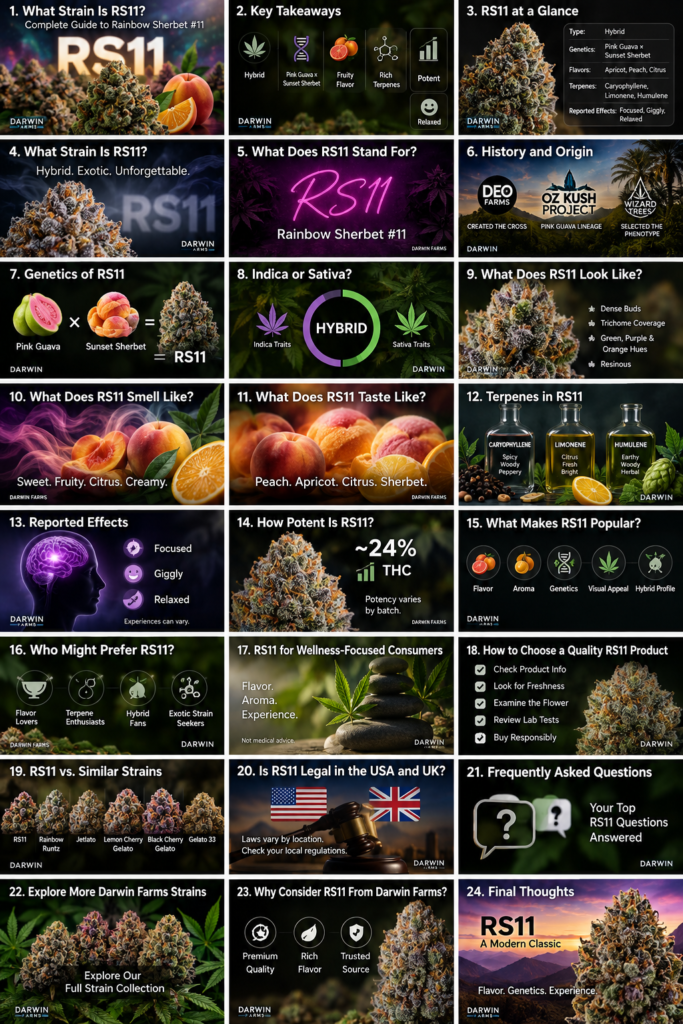
What Strain Is RS11? Complete Guide to Rainbow Sherbet #11 What strain is RS11? RS11, also known as RS-11 or Rainbow Sherbet #11, is a modern hybrid cannabis strain known for its fruit-forward flavor, distinctive aroma, colorful flower, and complex terpene profile. At Darwin Farms, we focus on helping adult cannabis consumers explore modern strains and understand their genetics, flavor profiles, aromas, and product characteristics. The commonly documented lineage of RS11 is Pink Guava × Sunset Sherbet. Leafly currently lists RS11 as a hybrid and identifies apricot, peach, and citrus among its leading reported flavors, with caryophyllene, limonene, and humulene among its listed terpenes. For adult consumers interested in modern exotic flower, RS11 stands out for its combination of genetics, flavor, aroma, and reported effects. This guide explores everything you need to know about the cultivar, including its origins, appearance, terpene profile, potency, reported effects, and how it compares with other popular strains. If you’re considering RS11, you can also explore the RS11 product at Darwin Farms to see the current product information. RS11 Key Takeaways RS11 is also known as RS-11 and Rainbow Sherbet #11. It is generally classified as a hybrid. Its commonly documented lineage is Pink Guava × Sunset Sherbet. Reported flavor characteristics include apricot, peach, and citrus. Caryophyllene, limonene, and humulene are among its listed prominent terpenes. Leafly’s current community information lists focused, giggly, and relaxed among reported effects. Cannabinoid and terpene levels can vary between products and batches. RS11 may appeal to adults who prioritize distinctive flavors, aromas, and modern cannabis genetics. RS11 Strain at a Glance Characteristic RS11 Also known as RS-11, Rainbow Sherbet #11 Type Hybrid Commonly documented genetics Pink Guava × Sunset Sherbet Reported flavors Apricot, peach, citrus Listed prominent terpenes Caryophyllene, limonene, humulene Reported effects Focused, giggly, relaxed Product type Cannabis flower These characteristics describe the cultivar generally. The actual cannabinoid and terpene profile can vary depending on genetics, cultivation, harvest, processing, storage, and the individual batch. What Strain Is RS11? RS11 is a hybrid cannabis strain commonly known as RS-11 or Rainbow Sherbet #11. Leafly’s RS11 profile identifies Pink Guava and Sunset Sherbet as the parents associated with RS11 and attributes its creation to DEO Farms. It also notes that Wizard Trees selected the RS-11 phenotype. The cultivar has become particularly recognizable within modern cannabis culture because of its combination of fruit-forward characteristics and exotic genetics. Rather than relying solely on the strain name, consumers should consider the actual product’s cannabinoid information, terpene profile, freshness, and laboratory results where available. What Does RS11 Stand For? RS11 is generally associated with Rainbow Sherbet #11. The number refers to the particular selection or phenotype that became associated with the RS11 name. Cannabis plants originating from related genetics can develop different characteristics, including differences in aroma, flavor, appearance, structure, and chemical composition. This is why a particular phenotype can eventually become recognized as a distinct cultivar. You may encounter several variations of the name, including: RS11 RS-11 Rainbow Sherbet #11 Rainbow Sherbert #11 Rainbow Sherb #11 The spelling can vary between sources, but RS11 is one of the most commonly used names. The History and Origin of RS11 RS11 is connected to DEO Farms, the OZ Kush project, and Wizard Trees. According to Leafly, RS11 was developed by crossing Pink Guava with Sunset Sherbet, while Wizard Trees selected the RS-11 phenotype. Pink Guava itself is associated with the OZ Kush project and has been used in the development of multiple modern cultivars. Leafly’s Pink Guava profile identifies it as part of the genetics behind RS-11, RS-54, and Zoap. As modern cannabis breeding has developed, cultivars such as RS11 have gained attention for characteristics beyond traditional indica and sativa classifications. Flavor, aroma, terpene expression, appearance, and specific genetics have become increasingly important to consumers. What Are the Genetics of RS11? The commonly documented RS11 cross is: Pink Guava × Sunset Sherbet This lineage is widely associated with the RS11 name, although you may find different genetic descriptions across cannabis websites. Some of these differences come from the broader ancestry of the parent strains and the way individual sources describe cannabis genetics. For that reason, the most useful approach is to distinguish between the commonly documented RS11 lineage and less consistently reported descriptions. Is RS11 Indica or Sativa? RS11 is generally classified as a hybrid cannabis strain. Leafly currently categorizes RS11 as a hybrid rather than exclusively indica or sativa. Some sellers may describe the strain using different indica or sativa percentages. These classifications can vary, particularly with modern cultivars that have complex breeding histories. For consumers, the actual cannabinoid and terpene profile of a particular product can provide more useful information than relying solely on an indica or sativa label. What Does RS11 Look Like? RS11 can have strong visual appeal, although its appearance can vary between growers, phenotypes, harvests, and storage conditions. Well-presented flower may feature: Dense or compact buds Noticeable trichome coverage Green coloration Darker or purple tones Orange or reddish pistils A visibly resinous surface Appearance can help consumers evaluate the presentation of flower, but it should not be used alone to determine potency or quality. Freshness, product information, cultivation standards, and laboratory testing are also important considerations. What Does RS11 Smell Like? Aroma is one of the characteristics that makes RS11 particularly interesting to flavor-focused consumers. Leafly currently identifies apricot, peach, and citrus among its leading reported flavor characteristics. Depending on the specific product and batch, you may notice combinations of: Sweet fruit Peach Apricot Citrus Candy-like sweetness Creamy notes Earthy undertones Spicy characteristics The exact aroma can vary depending on cultivation, curing, storage, phenotype, and terpene concentration. What Does RS11 Taste Like? RS11 is generally associated with a fruit-forward flavor profile. Its reported characteristics can include: Sweet fruit → peach and apricot → citrus → sherbet-like sweetness → earthy or spicy finish Leafly currently lists apricot, peach, and citrus among the strain’s leading reported flavors. The flavor of an individual product can vary considerably, so consumers who […]