
Sep
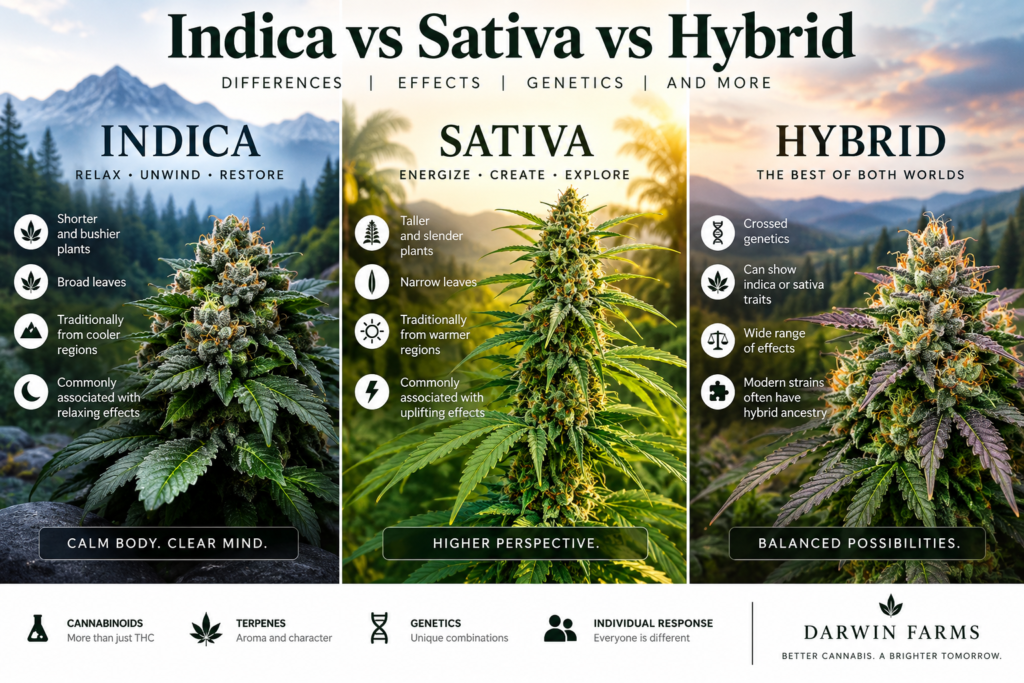
Indica vs Sativa vs Hybrid: What’s the Difference? Indica vs Sativa vs Hybrid is one of the most common comparisons people make when learning about cannabis. The three terms appear on strain descriptions, cannabis menus, educational websites and product pages throughout the United States, the United Kingdom and other markets. The traditional explanation is simple: indica strains are commonly associated with relaxing experiences, sativa strains with more uplifting or energetic experiences, and hybrid strains with characteristics from both. However, modern cannabis science shows that the difference between indica, sativa and hybrid is much more complicated than these familiar labels suggest. This guide explains what the terms mean, where they originated, how modern hybrid genetics have changed cannabis classification, and why cannabinoids, terpenes and individual chemistry may tell you more about a strain than the words indica or sativa alone. You can also explore the wider Darwin Farms strain collection for examples of modern cannabis genetics. Indica vs Sativa vs Hybrid: The Short Answer If you simply want to understand the traditional difference between indica vs sativa vs hybrid, here is the basic comparison: Category Traditional Description Plant Characteristics Common Consumer Association Indica Broad-leaf cannabis traditionally associated with Central and South Asian regions Typically shorter and bushier with broader leaves Relaxing, calming or body-focused experiences Sativa Narrow-leaf cannabis historically associated with warmer climates Typically taller with narrower leaves Uplifting, cerebral or energetic experiences Hybrid Cannabis produced by crossing different genetic lines Can display characteristics from either parent lineage Effects can vary widely depending on genetics and chemistry These descriptions are useful as a starting point, but they should not be treated as guaranteed predictions. Modern cannabis has been extensively crossbred, and two products carrying the same broad category can have very different cannabinoid and terpene profiles. What Is an Indica Strain? An indica strain is traditionally associated with Cannabis plants that grow shorter and more compact than classic sativa varieties. They are commonly described as having broader leaves, dense branching and relatively compact growth patterns. The word indica historically referred more to botanical characteristics and geographic origin than to a specific type of psychoactive effect. Over time, however, cannabis culture began using the word indica as shorthand for strains consumers often describe as relaxing, calming, heavy or suited to slower-paced situations. Traditional Indica Characteristics Shorter and more compact plant structure Broad leaves Dense branching Frequently associated with shorter flowering periods Traditionally linked with mountainous or cooler growing regions Often marketed as producing relaxing or body-oriented experiences The last point is important: an indica label does not guarantee sedation or relaxation. The actual experience can depend on THC concentration, other cannabinoids, terpene composition, dose, tolerance and individual response. What Is a Sativa Strain? A sativa strain traditionally refers to cannabis plants associated with taller growth, narrower leaves and longer flowering periods. Classic sativa-type plants are historically associated with warmer or tropical regions where longer growing seasons can support taller plants. In modern cannabis terminology, sativa has also become associated with consumer-reported experiences described as uplifting, cerebral, stimulating, creative or energetic. Traditional Sativa Characteristics Taller plant structure Narrower leaves Longer internodal spacing Often associated with longer flowering cycles Historically connected with warmer climates Frequently marketed as uplifting or energizing Again, the classification should be understood as a broad traditional label rather than a promise about how a particular cannabis product will affect every person. What Is a Hybrid Cannabis Strain? A hybrid cannabis strain is generally produced by crossing different cannabis genetic lines. Because cannabis breeders have been creating new crosses for generations, a large proportion of modern commercial strains have hybrid ancestry. Some hybrids are described as: Indica-dominant hybrids Sativa-dominant hybrids Balanced hybrids These terms can help describe how breeders or sellers interpret a strain’s ancestry, but they still do not provide a complete chemical profile. For example, modern dessert-style strains, Gelato crosses and Runtz-related genetics often contain multiple generations of hybridisation. This is one reason the simple indica-versus-sativa distinction becomes less precise when discussing modern cannabis. Indica vs Sativa vs Hybrid Comparison Feature Indica Sativa Hybrid Traditional plant shape Short and bushy Tall and slender Varies by genetics Leaf shape Broad Narrow Can vary Traditional effect association Relaxing Uplifting Variable Genetic background Traditional indica ancestry Traditional sativa ancestry Crossed genetics Modern reliability for predicting effects Limited Limited Limited Better information to examine Cannabinoid profile, terpene profile, potency, dose and individual response Where Did the Terms Indica and Sativa Come From? The words indica and sativa existed long before modern dispensaries or commercial strain menus. Historically, botanists attempted to classify cannabis plants according to features such as morphology, geographical origin and intended use. Different classification systems have been proposed over time, and cannabis taxonomy remains more complicated than the modern consumer labels might suggest. A peer-reviewed review of cannabis systematics explains that common commercial uses of the terms sativa and indica do not always align neatly with formal botanical taxonomy. Extensive breeding and genetic exchange have made simple classifications increasingly difficult. For readers interested in the scientific history, see the peer-reviewed review Cannabis Systematics at the Levels of Family, Genus, and Species, available through the U.S. National Library of Medicine’s PubMed Central database. Why Indica vs Sativa Is More Complicated Today One of the biggest changes in modern cannabis is extensive hybridisation. Breeders have crossed plants repeatedly to select characteristics such as aroma, flavour, cannabinoid production, appearance, resin production, growth traits and other desirable features. As a result, many strains available today do not fit neatly into a traditional indica or sativa category. This is particularly important when comparing indica vs sativa vs hybrid strains. A modern strain described as indica may contain genetics from several earlier hybrid lines. The same applies to strains marketed as sativa. Do Indica and Sativa Labels Predict Effects? Not reliably. This is one of the most important points when learning the difference between indica and sativa. A large study examining the phytochemical diversity of commercial cannabis in the United States found that the familiar Indica, […]